Kuwait and Puerto Rico
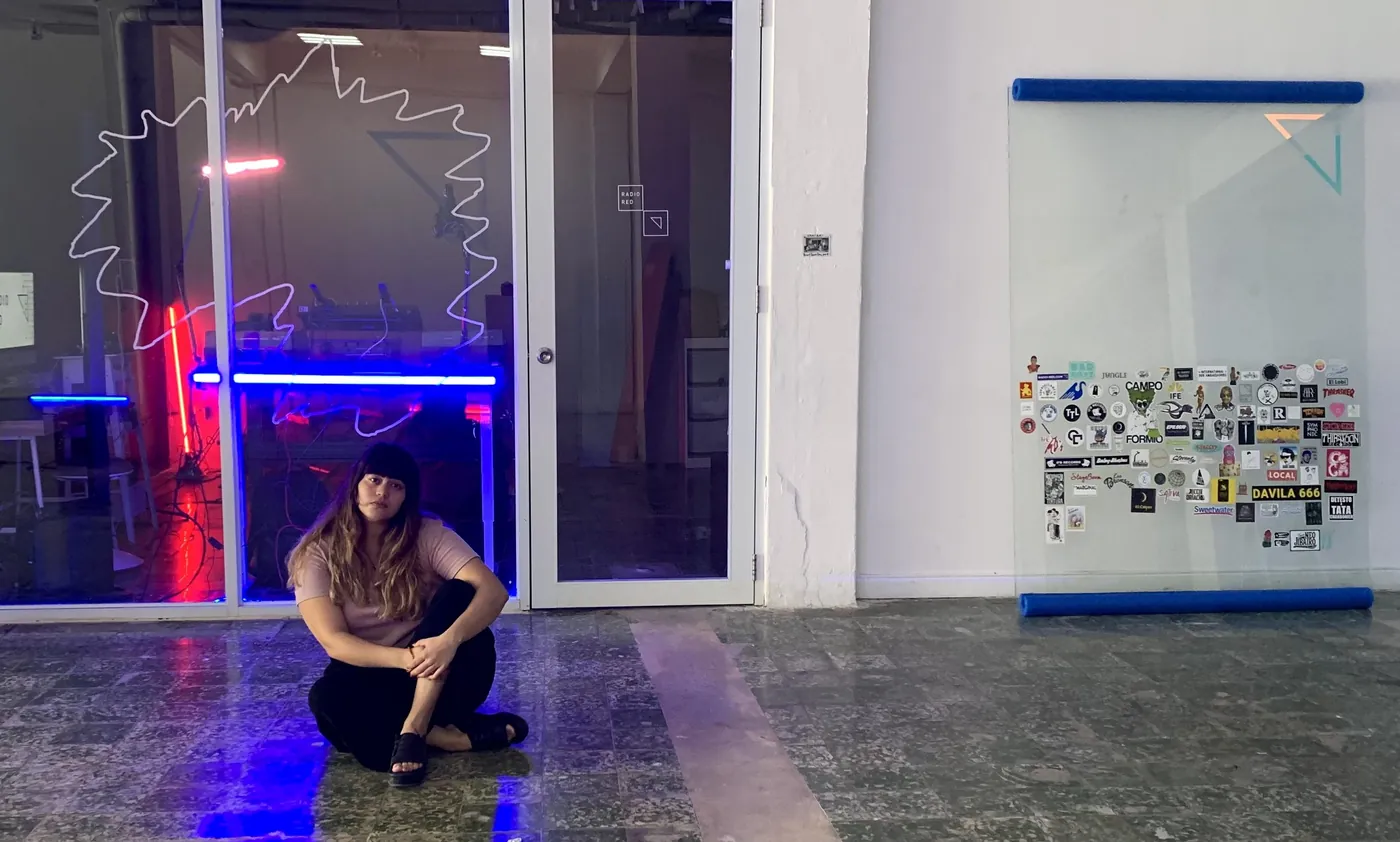
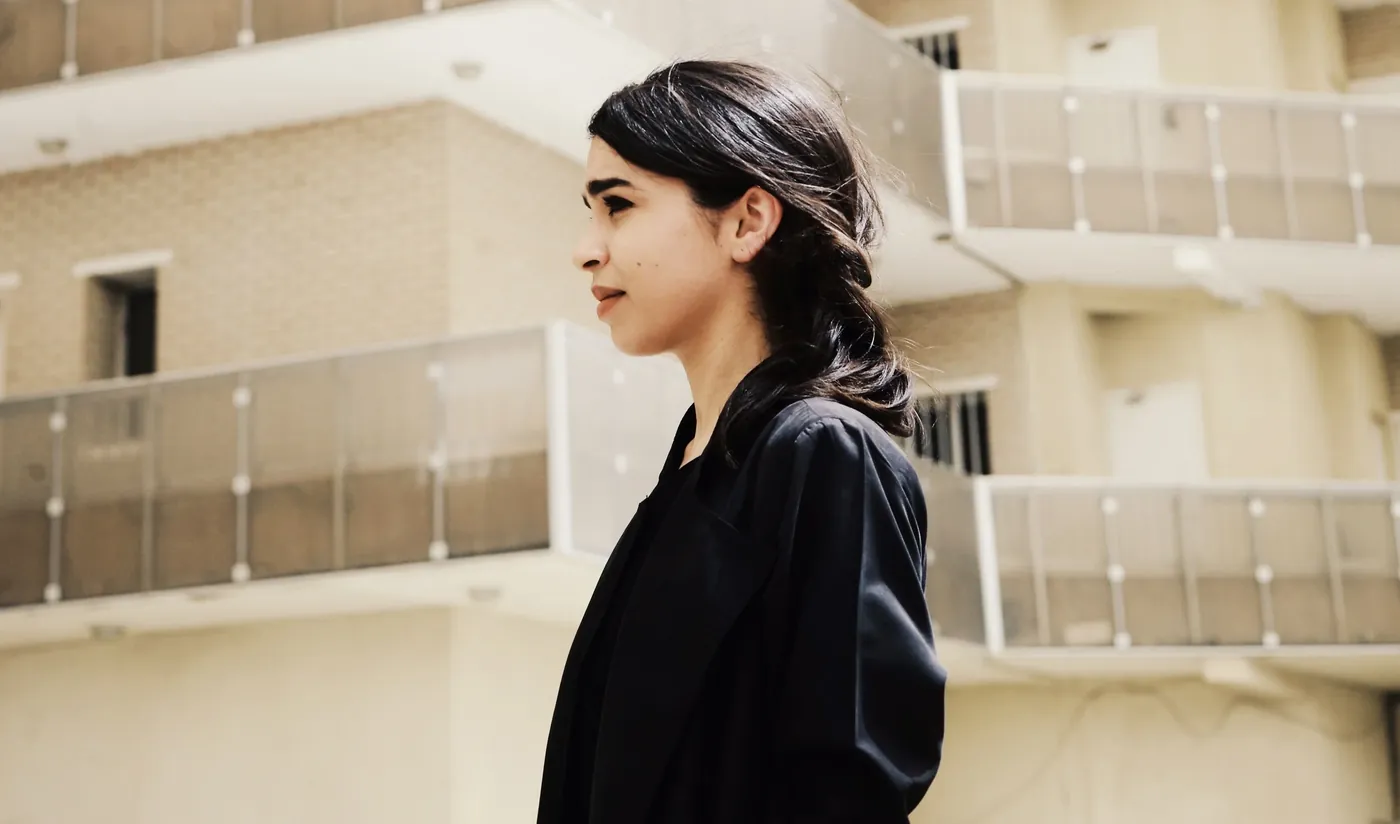
Alia Farid was born in Kuwait in 1985 and lives and works between Kuwait and Puerto Rico. She studied at the Escuela de Artes Plásticas in San Juan, then in Cambridge, Massachusetts, and in Barcelona. In 2023 she received the Lise Wilhelmsen Art Award.
Water before oil
Water infrastructure and oil extraction recur in her work. Before oil was discovered in Kuwait, she has said, its water was brought from the Shatt al-Arab in southern Iraq. For ‘In Lieu of What Was’ at Portikus in Frankfurt (2019) she made five drinking fountains, all from existing molds of water receptacles; ‘In Lieu of What Is’ followed at Kunsthalle Basel in 2022.
The marshes of southern Iraq
Her work often takes her to southern Iraq and the marshlands around the Shatt al-Arab, the river formed where the Tigris and the Euphrates meet. She had been visiting the marshlands for several years, making field recordings there.
Buffalo calls and the khashaba
The recordings are mostly buffalo calls, with some khashaba, which she describes as a small drum specific to southern Iraq with a loud, explosive, almost electronic sound: “like a drum machine but analog.” In Basra the word also names a musical tradition of drums, folk dances and singing, where the drum is known as the khishba; the name comes from khashab, the Arabic word for wood.
A record pressed from river plastic
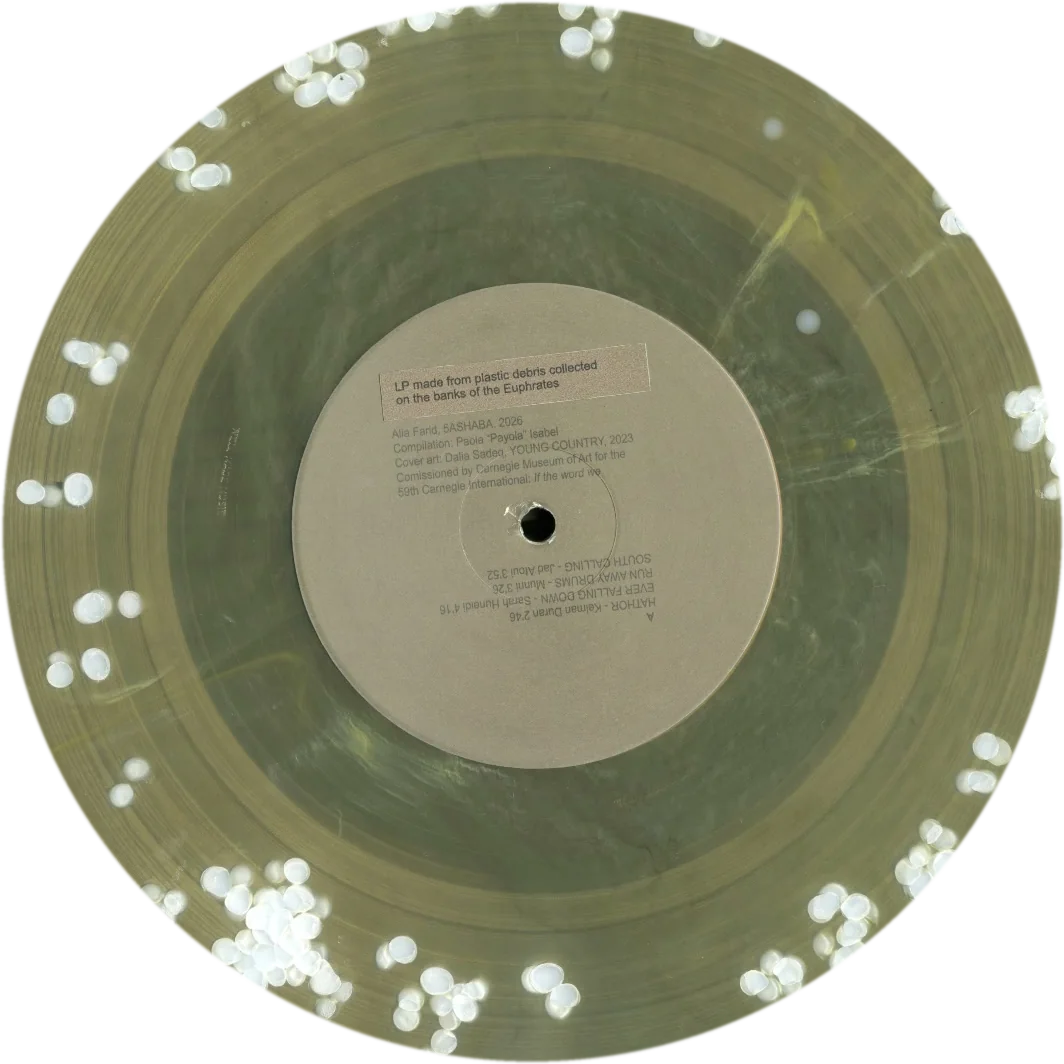
She wanted the sounds engraved on a record made from melted-down plastic debris. 5ASHABA was pressed in Pittsburgh with Hellbender Vinyl in two forms: a standard pressing, and a limited edition made from discarded plastic bottles and plastic debris she collected on the banks of the lower Euphrates, sold as an artwork and not intended for playback. Carnegie Museum of Art commissioned it for the 59th Carnegie International, ‘If the word we’; the record's curator is Ryan Inouye. She asked musician friends to listen to the recordings and respond with their own music, and their pieces are the record.
The record outdoors
At the museum the record anchors an outdoor sound installation, programmed to play on a schedule aligned with Shatt al-Arab time. The exhibition also lists ‘Field recordings from the lower Euphrates’, a six-channel work eight hours long. ‘If the word we’ is on view in Pittsburgh until January 3, 2027.
If tonight sent you looking
From her work: