Hamelin, Bedford, Florence
Max Richter was born on March 22, 1966 in Hamelin, the town of the Pied Piper, in what was then West Germany, and grew up in Bedford, England. He studied composition and piano at the University of Edinburgh and at the Royal Academy of Music in London, then went to Florence to study with Luciano Berio, an encounter he has described as ‘opening a door’ to music that was more various. Back in Britain he co-founded the contemporary classical ensemble Piano Circus and stayed ten years, commissioning and playing music by Arvo Pärt, Brian Eno, Philip Glass, Julia Wolfe and Steve Reich. In 1996 he crossed into electronic music with the Future Sound of London, first as the pianist on Dead Cities, then as a co-writer.
The Blue Notebooks
His first album under his own name, Memoryhouse (2002), was recorded with the BBC Philharmonic. Two years later came The Blue Notebooks, with Tilda Swinton reading from Kafka’s Blue Octavo Notebooks and from the poetry of Czesław Miłosz. Richter has described it as a protest album about the Iraq War and a meditation on his own troubled childhood. Its best-known piece, ‘On the Nature of Daylight’, has had a long second life on screen: it opens and closes Denis Villeneuve’s Arrival and plays under the final scene of Hamnet. In 2019, The Guardian named the album one of the best classical works of the century.
Recomposed
In 2012 he took apart some of the most familiar music in the repertoire: Recomposed by Max Richter: Vivaldi – The Four Seasons, for which, he said, he discarded around 75 percent of Vivaldi’s original. It premiered at the Barbican in London on October 31, 2012, with the violinist Daniel Hope and the Britten Sinfonia conducted by André de Ridder, came out on Deutsche Grammophon and reached the top of the iTunes classical charts in the UK, Germany and the US. In France it later joined the music syllabus of the baccalauréat.
A whole night
Sleep (2015), made with his partner and collaborator, the visual artist Yulia Mahr, lasts eight and a half hours: thirty-one pieces, most of them twenty to thirty minutes long, written to be heard through a night. BBC Radio 3 broadcast it live from midnight to 8 a.m. on September 27, 2015, the longest live broadcast of a single work in the network’s history. Since then it has been performed to audiences lying in beds, from Grand Park in Los Angeles to the Sydney Opera House, Berlin and the Philharmonie de Paris: a concert you are allowed to sleep through. Ten years on, Sleep Circle (2025) returned to it in ninety minutes, made in consultation with the neuroscientist David Eagleman. This session, with room to lie down, borrows a little from that tradition.
Three ballets with Wayne McGregor
Richter and the choreographer Wayne McGregor have made three ballets together. Infra (2008, for the Royal Ballet) grew into his 2010 album of the same name, centered on the London bombings of 2005. Woolf Works (2015) followed three novels by Virginia Woolf, and its music became Three Worlds (2017). The third, MaddAddam, distills all three novels of Margaret Atwood’s trilogy, Oryx and Crake, The Year of the Flood and MaddAddam: a co-commission of the National Ballet of Canada and the Royal Opera House, first developed before the pandemic, delayed by it, and premiered in Toronto on November 23, 2022.
The flood, taken apart
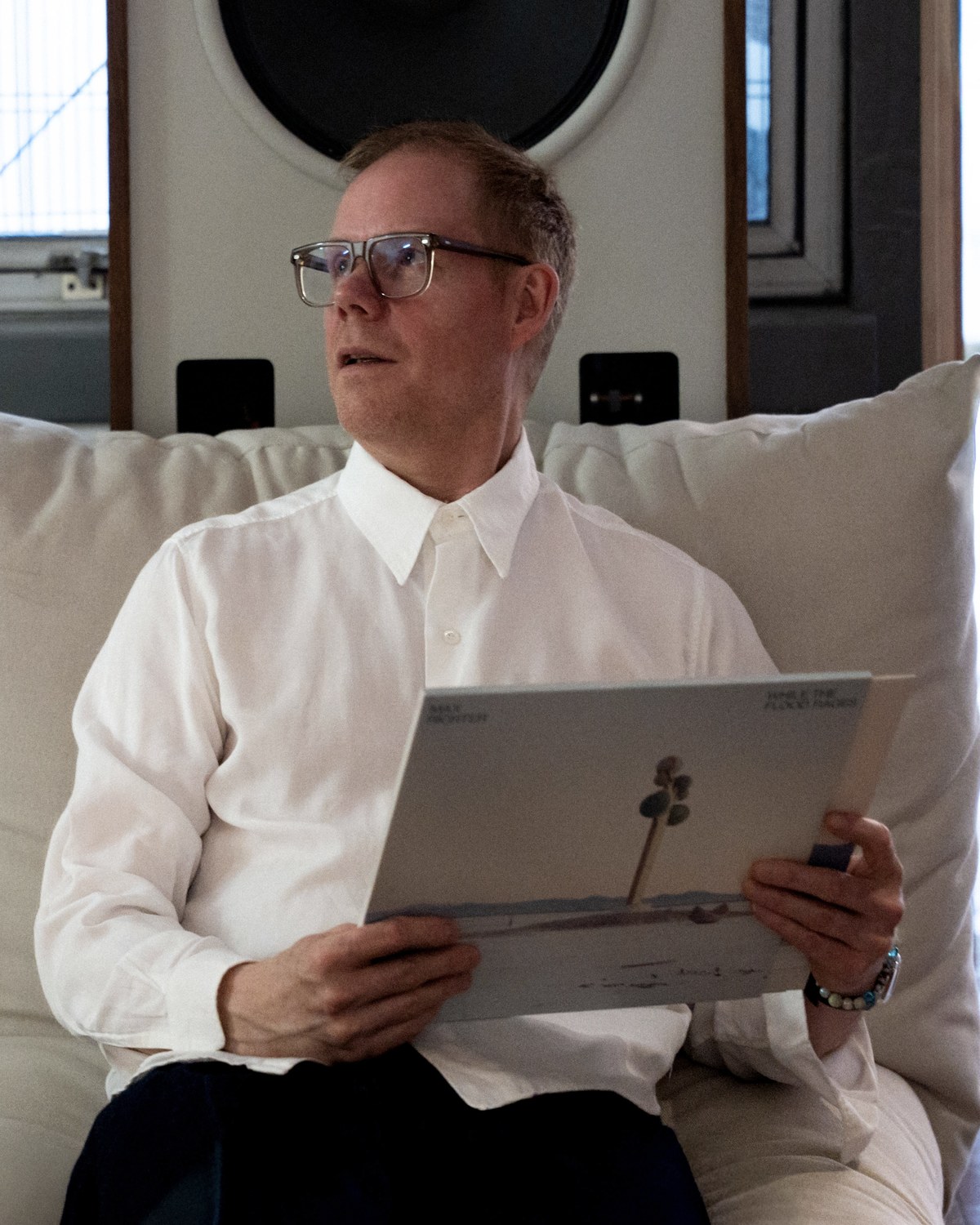
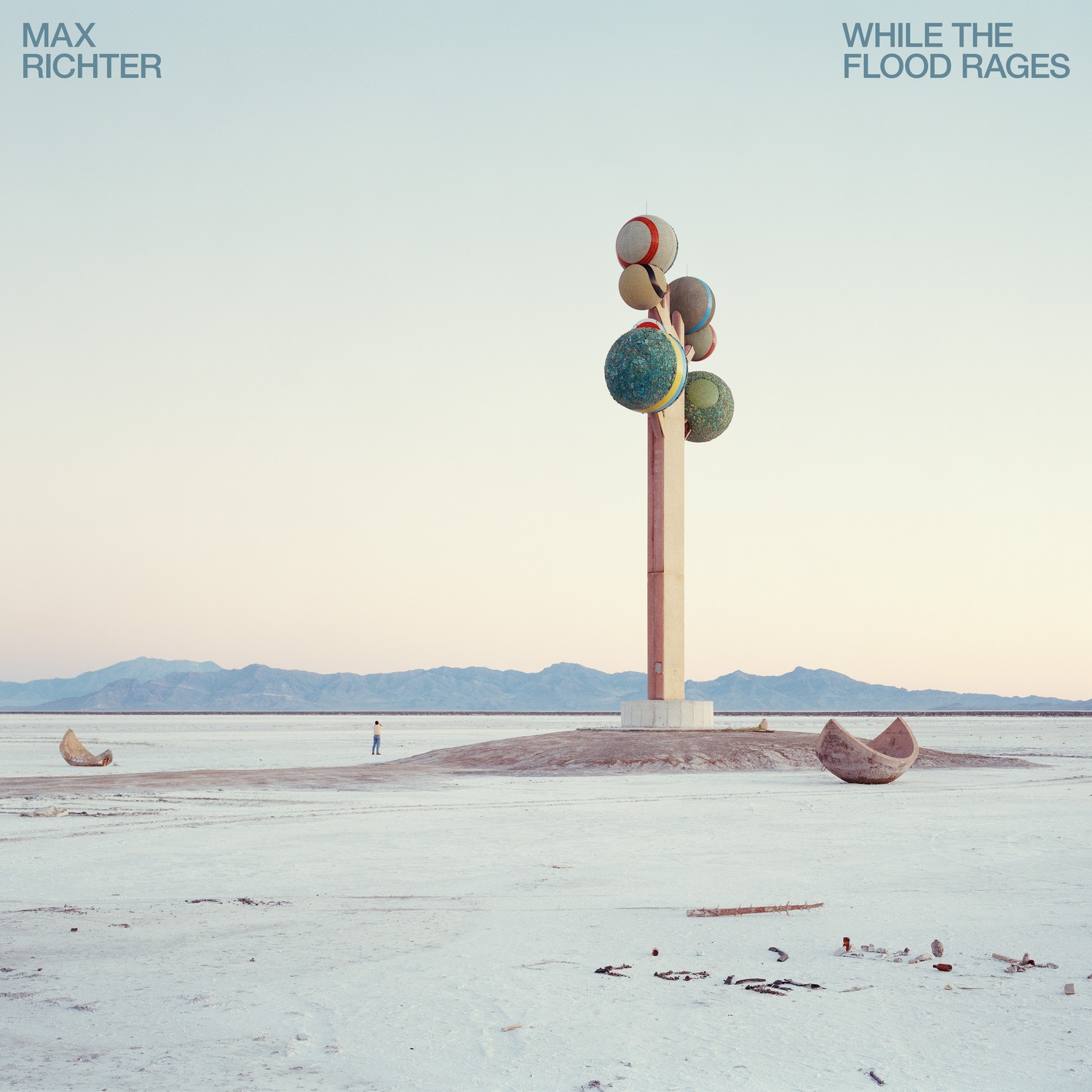
While the Flood Rages is not the ballet’s score as it was danced. Richter took that music apart and rebuilt it for the ear alone, ‘a different way,’ he says, ‘to reach the same destination,’ and recorded it at Studio Richter Mahr, the studio he founded with Yulia Mahr on thirty-one acres of woodland in Oxfordshire. Its sounds come out of the same tension as Atwood’s books, the natural world against the machine: a recording of the ocean, processed into a pulse like a heartbeat, opens the album; ‘Their Eerie Music’ uses electromagnetic recordings of the technology inside the studio; ‘Data Ballistics’ builds its rhythms from manipulated gunfire; in the third act, ‘Dawn’ and ‘Background Radiation’ let choir, orchestra and electronics fold into one another, and ‘Now We Can Sing’, the first single, closes it.
A record for listening rooms
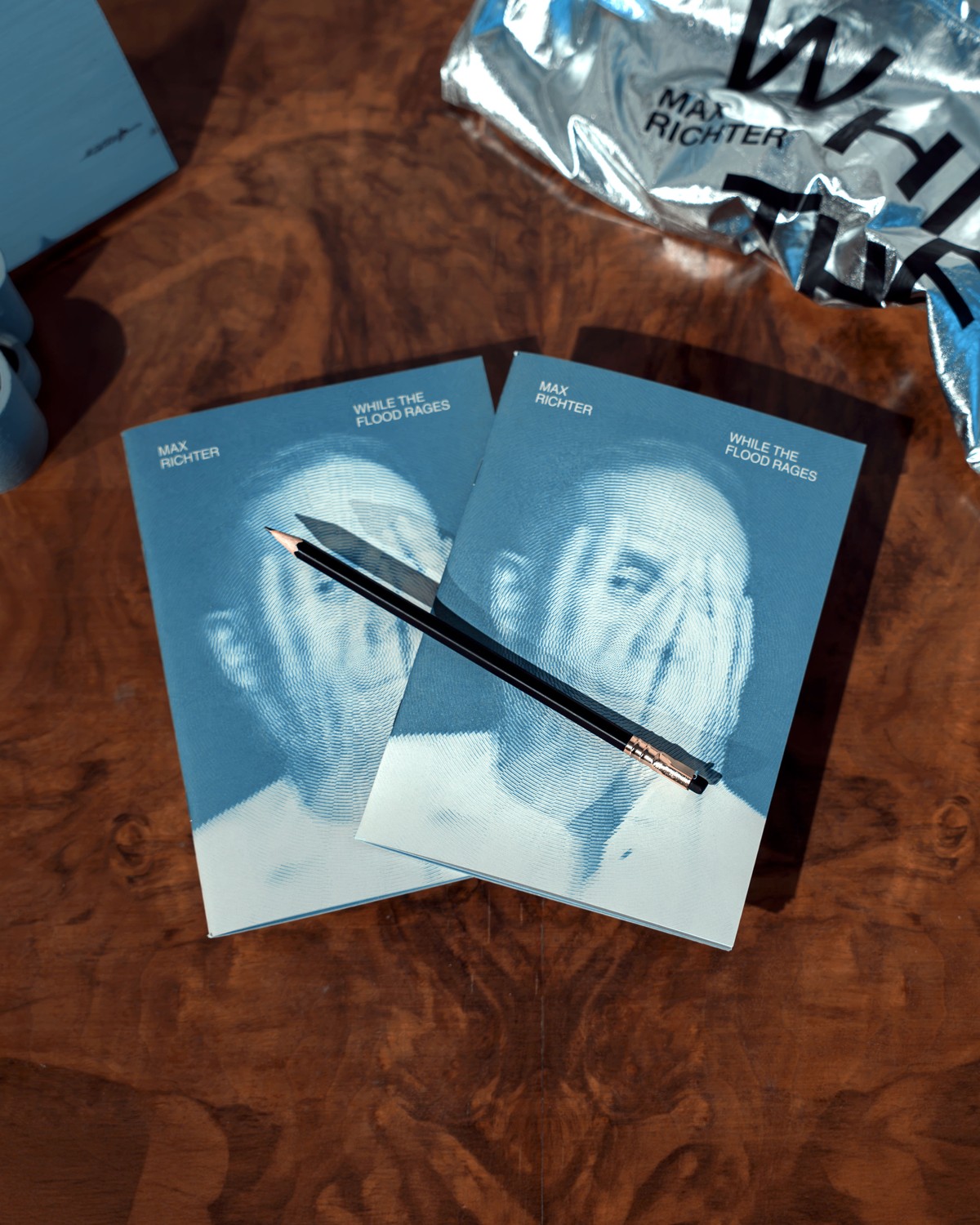
The album came out on October 16, and that same day the WTFR Global Listening Events began at Public Records in New York, then went on to Friendly Pressure in London (October 17), Book Bar in Paris (October 21), KOMFY in Seoul and TOH in Tokyo (October 22) and Pastiche in Berlin (October 23), alongside smaller nights in cafés, wine bars and hi-fi rooms around the world, where the devices go away and the album plays whole. This session at Omelas was one of those nights. With the album came a crossword book, with new essays on its themes by the literary critic Anahid Nersessian and the philosopher Victoria Trumbull, in limited copies sold through independent bookstores.
If tonight sent you looking
His own catalog, for what comes next:
On screen: his scores for Waltz with Bashir (2008), which won him the European Film Award, HBO’s The Leftovers (2014) and Chloé Zhao’s Hamnet (2025), his first Academy Award nomination.