From Cabo Rojo, by way of New York
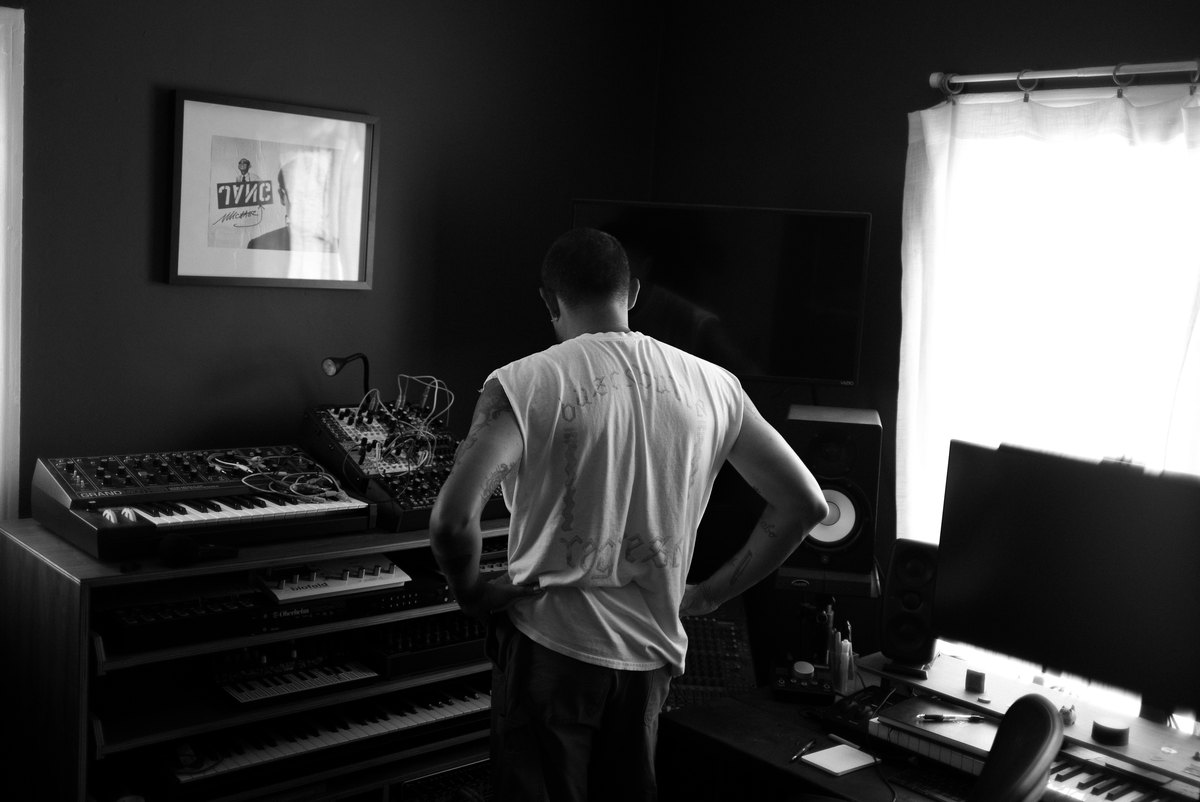
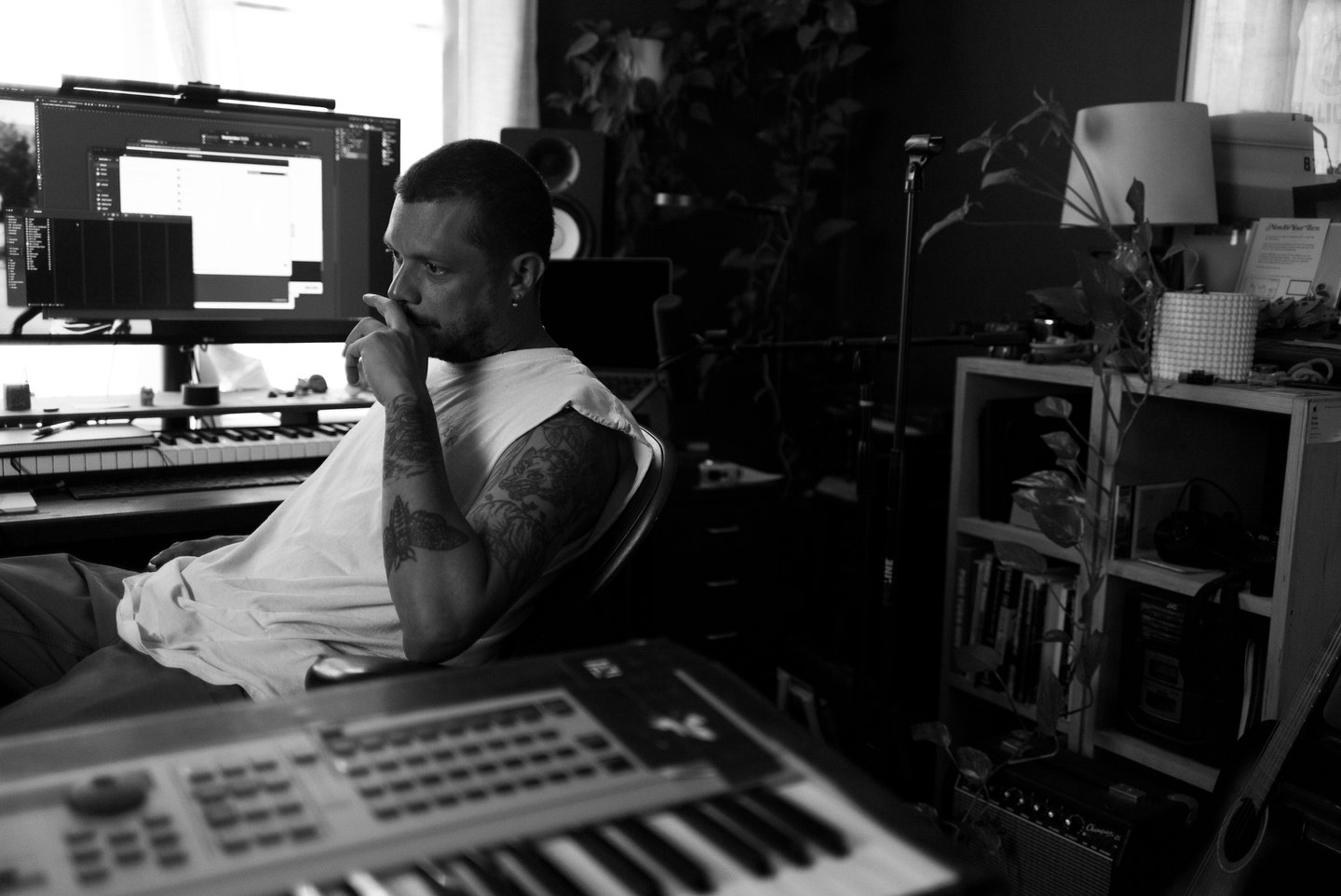
Pablo Swiss is the artist name of Alain Emile, a film and media composer from Cabo Rojo, Puerto Rico. He played in bands on the island, studied recording arts at Full Sail, and moved to New York, where he spent a long career in advertising. In 2016 he returned to musical experimentation, and the record that came out of it became, in his words, a calling card for approaching film directors. He moved to Los Angeles soon after and has worked from there since. He was the drummer in those bands, and the name came in 2016, when he began working alone: ‘I used that name to be able to experiment and make music without anyone in a band having to approve anything.’ The film work he signs with his own name; Pablo Swiss stays, in his words, a space to experiment, without having to answer to anyone.
seven (2017)
His first record, self-released on August 10, 2017, takes its name and its starting point from Carlo Rovelli’s Seven Brief Lessons on Physics: seven pieces of sound design, field recordings and repetition, from ‘Beautiful Theories’ to ‘People’. Bandcamp Daily chose it among the best new ambient releases of September 2017. The book came along on a flight to Puerto Rico; he marked phrases as he read, and back in New York he designed a synthesizer sound from each one, so that every track began as one of those sounds, one per chapter. He wrote to Rovelli afterward, and the physicist wrote back.
155mph, live (2018)
On October 14, 2018, he played the Late Breakfast Sessions in downtown Los Angeles: analog and digital instruments with field recordings from Puerto Rico, New York, Philadelphia, Minnesota and California, and voices remembered. The two long pieces, ‘Hello’ and ‘Adiós’, combine material from seven with music from the still unreleased Desert María. The recording came out that December with Templo Animal, dedicated to Annie Acosta.
Desert María (2019)
Released on November 4, 2019, after nearly two years of work. It began as a short story and became, after the loss of a loved one, music about grief: improvisations and field recordings with very little editing, taped in Cabo Rojo and in Santa Monica, California. Eleven pieces, among them ‘Magnolia’ and ‘Welcome to Salem’. It also came as a cassette, an edition of one hundred, each with one of eight photographic prints. One of its pieces began the day of his mother’s funeral: back at the house it started to rain, and he recorded it. When the mastering engineer heard a noise on the track and went looking for a way to reduce it, Pablo asked him to leave it: ‘That’s rain.’
Templo Animal
With Almanacs he co-founded Templo Animal, a Spanish-speaking space for experimental electronic musicians, born from the lack of Latin American voices in that music. ‘It’s a label, but also a community,’ he told Bandcamp. His pieces ‘Plano’ (2019) and ‘Cortometraje’ (2021) are on the collective’s first and third volumes, and in 2020 he and Almanacs released 2000km, a cassette of two continuous ambient sides, on Mystery Circles.
For the screen
Under his own name, Alain Emile writes music for film. His soundtracks of 2023 and 2024 include Mancha, Pétalos, Mara Has Three Jobs in San Juan, Puerto Rico, Exit Fee and Stalled: short pieces, most under two minutes, made to sit under a picture. His most recent score is Esta Isla (2025), Puerto Rico’s candidate for the Goya Award for Best Ibero-American Film and winner of the John Cassavetes Award at the 2026 Independent Spirit Awards; the score itself won Best Original Score at Cine Ceará.
In his own words
On what he listened to growing up in Cabo Rojo, where everyone around him played reguetón, dembow, reggae and ska: Draco Rosa’s Vagabundo, then Aphex Twin, Brian Eno and Squarepusher, records he admired because, as he puts it, he had no idea how they were made; the score of Requiem for a Dream did the same for film. On method: ‘Repetition. When I find something that leads me to a rhythm or a sound I can repeat until I forget I’m repeating it, I think: I like this.’ He always carries a recorder. On Puerto Rico in the music: ‘I’m not going to put a timbal in a scene just because I’m Latino. Everything I compose comes from many memories of my childhood and of how I felt then.’ On what comes next: a record built from the discoveries of the Arecibo radio telescope, made the way he makes a film score, with images that cannot be separated from the music. From a conversation with David Guerra, October 2026.
Sedimentos, and if tonight sent you looking
The recordings we heard are intended for his first vinyl, Sedimentos, a limited LP presented by MARCA RIBE; tonight’s proceeds go to its production. It took two and a half years, and he sent no one a preview while he made it. It is built around one long piece, split in three, with a rhythm that begins on the second track; under the whole record run field recordings by Yarelmi Iglesias Vázquez, the sound recordist he met on film sets in Puerto Rico (among them Mara Has Three Jobs in San Juan, Puerto Rico), who had set out to record landscapes that may soon be gone, in Boquerón among them. The record began when a festival asked him to score, live, a 1940s documentary about rain in Amsterdam.
Until then: